Understanding the Art of Tattooing
Tattooing is both an ancient art form and a modern profession that requires a blend of creativity, precision, and responsibility. Whether you’re an aspiring artist or simply curious about the craft, understanding the fundamentals of tattooing is essential before picking up a machine. This guide will walk you through the basics of tattooing for beginners, from understanding equipment and hygiene to grasping design concepts and practicing technique. With the right approach, patience, and respect for the process, you can begin your journey toward becoming a skilled tattoo artist.
Essential Equipment for Tattooing
Before you can start tattooing, you’ll need to familiarize yourself with the necessary tools. Using the right equipment ensures consistent results and maintains safety standards for both the artist and client. Here are the most fundamental tools you’ll need to understand:
Tattoo Machine
The tattoo machine, sometimes called a tattoo gun, is the heart of any setup. It uses electromagnetic coils to move a needle bar up and down, puncturing the skin and depositing ink. Modern tattoo machines come in coil and rotary forms, each with distinct advantages. Coil machines provide excellent line control, while rotary machines operate more quietly and are easier for beginners to handle.
Needles
Tattoo needles come in various shapes and sizes, depending on the task. Liner needles create crisp outlines, while shader or magnum needles are used for filling and shading. Always use sterilized, single-use needles to prevent infection or cross-contamination. Beginners should start by learning how to differentiate and properly install each needle type.
Inks and Pigments
Tattoo ink quality can greatly affect the final outcome of a tattoo. Professional-grade inks offer vibrant color saturation and better longevity. It’s important to understand the ingredients and safety certifications of inks you use. Never mix or dilute ink with tap water; only use sterile solutions recommended for tattooing.
Power Supply and Foot Pedal
The power supply regulates how much power reaches your tattoo machine. The foot pedal allows hands-free operation, enabling better control during tattooing. Adjusting your voltage settings depending on the technique and machine type will ensure smooth performance.
Hygiene Supplies
Cleanliness and sterilization are vital. You’ll need gloves, disinfectants, surface barriers, ink caps, and autoclaves or sterilization alternatives. Always maintain an organized and sanitized workstation to protect yourself and your clients.
Setting Up a Hygienic Workspace
Proper hygiene is the hallmark of professional tattooing. A clean workspace prevents infections and builds trust with clients. As a beginner, cultivating these habits early sets the foundation for a safe practice.
Preparation and Disinfection
Before tattooing, disinfect all surfaces, tools, and equipment. Use single-use materials wherever possible. Cover machines and power cords with protective wraps and clean your hands thoroughly before and after every session. Following these steps minimizes cross-contamination risks.
Personal Protective Equipment
Wearing gloves, masks, and protective aprons helps maintain safety. Always change gloves when switching tasks—such as from setting up the workstation to touching the client. This small but crucial step maintains hygiene and professionalism.
Client Skin Preparation
Before beginning a tattoo, shave and clean the area with antiseptic solutions. Apply a stencil using transfer paper or skin-safe markers. Make sure the client’s skin is dry and smooth before starting, as this helps the ink settle evenly.
Mastering Basic Tattoo Techniques
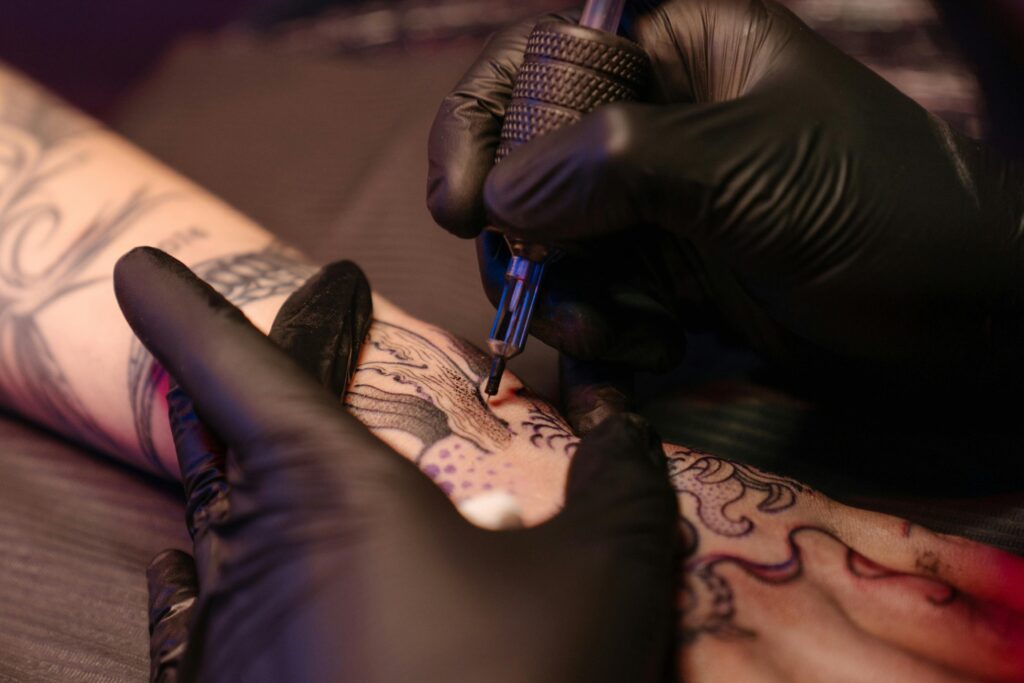
Technique plays a central role in tattooing. It takes time and practice to master proper needle depth, steady hand movement, and consistent line work. A beginner should not rush into tattooing human skin without substantial practice.
Practicing on Synthetic Skin
Start by practicing on synthetic tattoo skins or fruit with thick rinds, such as oranges or grapefruits. These surfaces provide resistance similar to human skin, allowing you to control hand pressure and needle technique safely before progressing to real clients.
Line Work
Clean lines define the quality of a tattoo. Maintain a steady machine angle and consistent speed as you draw the lines. Avoid overworking areas, which can cause skin trauma and uneven lines. Beginners often find it helpful to trace designs to build muscle memory.
Shading and Coloring
Shading brings life and dimension to tattoos. Experiment with different voltages and needle configurations to find your preferred shading technique. Use circular or whip shading motions for smooth gradients. When adding color, layer pigment evenly without oversaturating the skin.
Skin Depth and Pressure
Knowing how deep to insert the needle is crucial. Too shallow, and the ink may fade quickly; too deep, and it can cause scarring. The typical depth ranges around one to two millimeters, varying slightly depending on skin type. Consistent hand pressure ensures even ink placement.
Learning Design and Art Fundamentals
Strong artistic skills separate good tattoo artists from great ones. Before tattooing permanently, sharpen your drawing and design abilities. Understanding composition, line flow, and color theory ensures tattoos look visually balanced and appealing.
Sketching and Tracing
Drawing is a fundamental part of tattooing. Spend time sketching freehand designs and tracing popular tattoo styles to build confidence. Try experimenting with classic motifs like roses, skulls, or mandalas to understand shape and proportion.
Digital Design Tools
Many artists today use tablets and design software to create and refine tattoo layouts. Digital tools allow easy resizing, mirroring, and color testing. This technology helps clients visualize the final tattoo more accurately before committing to the design.
Understanding Placement and Flow
The human body is a three-dimensional canvas. A design that looks good on paper must also complement the curves and contours of the body. Learn how different placements interact with muscle structure and movement for more cohesive results.
Aftercare and Healing
Proper aftercare ensures tattoos heal beautifully and maintain their vibrancy. As an artist, part of your responsibility is educating clients on how to care for their skin post-session.
- Keep the tattoo covered with a sterile bandage for the first few hours.
- Gently wash with mild soap and lukewarm water, avoiding harsh scrubbing.
- Apply a thin layer of fragrance-free ointment as recommended by your artist.
- Avoid direct sunlight, swimming pools, and tight clothing during the healing process.
- Do not pick or scratch healing scabs to prevent fading or infection.
Developing Professional Skills
Beyond mastering the technical side of tattooing, professionalism and customer service are essential. Building trust, maintaining hygiene, and continuous learning define a successful tattoo career. Consider apprenticing under an experienced artist to receive hands-on guidance and feedback. This mentorship allows you to refine your technique and understand shop operations, client management, and legal regulations surrounding tattoo work.
Attending conventions, workshops, and online seminars keeps you updated on new methods, equipment innovations, and evolving tattoo trends. The industry thrives on innovation, and staying adaptable will help you grow as an artist. Always remember that every tattoo you create is both a piece of art and a lifelong impression on someone’s body—treat the process with respect, care, and pride.
By dedicating time to learning, practicing, and upholding high standards, you can build a rewarding career in tattooing. Start with patience, focus on safety, and let your artistic passion guide your progress. Tattooing is not just about ink—it’s about the connection, creativity, and permanence of art that speaks through the skin.