


How to Prime a Well Pump After a Power Outage
A power outage can cause a well pump to lose its prime, especially if the pump system has a leak, a faulty check valve, or has been drained during maintenance. If your well pump is running but no water is coming from the faucets, priming the pump may restore water pressure.
In most cases, priming a well pump involves turning off the electrical power, locating the pump’s priming port, adding clean water to the pump housing, and restarting the system carefully.
This guide explains how to prime a well pump after a power outage, what causes a pump to lose its prime, how to troubleshoot it if priming does not work, and when you should call a professional.
What Does It Mean to Prime a Well Pump?
Priming a well pump means filling the pump casing and suction line with water so the pump can create the pressure needed to move water from the well into your home’s plumbing system.
Jet pumps and some above-ground well pump systems require manual priming. Submersible well pumps, which sit underwater inside the well, generally do not require manual priming.
If you have an above-ground jet pump and it has lost its prime after a power outage, you may need to add water before it can pump normally.
Why Does a Well Pump Lose Prime After a Power Outage?
A power outage itself does not always cause a pump to lose prime. However, the interruption can expose an existing problem in the well system.
Common causes include:
- A leaking check valve
- A damaged foot valve
- A leak in the suction pipe
- Low water level in the well
- Air entering the suction line
- A cracked or damaged pump housing
- Improper previous priming
- A drained pressure tank or plumbing system
- Pump overheating or mechanical problems
- A faulty pressure switch
If your pump repeatedly loses prime after every outage, the underlying issue should be investigated rather than repeatedly adding water.
How to Prime a Well Pump After a Power Outage
Follow these steps carefully.
Step 1: Turn Off the Electrical Power
Before working on the pump, turn off power at the circuit breaker or disconnect switch.
Do not work on an energized well pump.
Confirm that the pump cannot accidentally start while you are opening the priming port.
Safety first: Water and electricity are a dangerous combination. If you are uncomfortable working around electrical equipment, contact a qualified professional.
Step 2: Locate the Well Pump
Find the pump and identify whether you have an above-ground jet pump or a submersible pump.
An above-ground pump is typically located:
- In a basement
- In a utility room
- In a well house
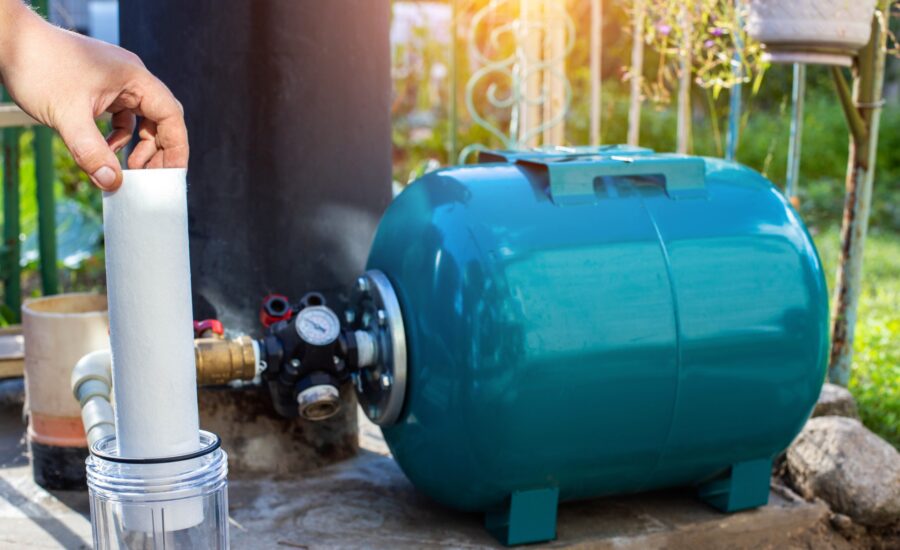
- Near the pressure tank
Look for a pump housing connected to pipes leading toward the well and your home’s plumbing system.
If the pump is installed inside the well, it is likely a submersible pump and the priming procedure is different.
Step 3: Find the Priming Port
Most above-ground jet pumps have a priming plug or priming port near the top of the pump housing.
The exact location varies depending on the manufacturer and pump design.
Remove the priming plug carefully.
If there is already water inside the pump, the system may still have some prime.
Step 4: Fill the Pump With Clean Water
Using clean water, slowly fill the pump housing through the priming port.
Continue adding water until the pump housing is full.
Depending on the system, you may also need to allow water to enter the suction line.
Do not run the pump dry.
Running a pump without adequate water can damage internal components and seals.
Step 5: Replace the Priming Plug
Once the pump housing is full of water, reinstall the priming plug securely.
Make sure the connection is properly sealed, but avoid overtightening it and damaging the threads.
Step 6: Open a Faucet
Open a nearby cold-water faucet slightly.
This gives trapped air somewhere to escape when the pump starts.
You may hear air coming through the plumbing. That can be normal during the initial priming process.
Step 7: Restore Power to the Pump
Turn the circuit breaker or disconnect back on.
The pump should start when the pressure in the system is below the pressure-switch setting.
Watch the pressure gauge.
If the pump successfully picks up water, the pressure should gradually increase.
Step 8: Watch the Pressure Gauge
A functioning well system should build pressure after the pump establishes prime.
Many residential well systems use common pressure-switch settings such as:
- 30/50 PSI
- 40/60 PSI
However, your system may use different settings.
Do not change the pressure-switch settings unless you understand the system and the manufacturer’s specifications.
Step 9: Let the System Build Pressure
Allow the pump to run long enough to establish normal pressure.
Once pressure reaches the appropriate cut-off point, the pump should shut off automatically.
Close the faucet after the water flow becomes steady.
If the pump continues running without building pressure, turn it off and investigate the cause.

What If the Well Pump Still Won’t Prime?
If your well pump does not regain prime after adding water, there may be another problem.
Check the following possibilities.
1. Check for a Suction-Side Leak
A small leak on the suction side can allow air into the system.
Inspect:
- Pipe connections
- Threaded fittings
- Unions
- Seals
- Pump connections
- Suction pipe
Even a relatively small air leak can prevent an above-ground pump from maintaining prime.
2. Inspect the Check Valve
A check valve prevents water from flowing backward toward the well when the pump stops.
If the valve is stuck, damaged, or leaking, water can drain from the suction system.
The pump may then lose prime whenever it shuts down.
3. Check the Foot Valve
A foot valve is commonly installed at the bottom of a well’s suction pipe.
Its purpose is to keep water in the pipe when the pump stops.
A defective foot valve can cause symptoms such as:
- Loss of prime
- Long pump start-up times
- Low water pressure
- Pump cycling problems
- No water after an outage
4. Check the Well Water Level
A pump cannot supply water if the well water level has dropped below the pump’s effective pumping range.
Low groundwater levels, drought, or excessive water usage can contribute to this problem.
If the pump repeatedly loses prime despite having no obvious leaks, low well yield or a changing water level may need to be investigated.
5. Check the Pressure Gauge
A faulty or inaccurate pressure gauge can make troubleshooting more difficult.
If the pump runs but the gauge remains at zero or barely increases, there could be an issue with:
- The pump
- Suction line
- Check valve
- Foot valve
- Water level
- Pressure gauge
Can a Submersible Well Pump Lose Prime?
Generally, a submersible well pump does not need to be manually primed.
Because the pump is installed underwater, it is already surrounded by water.
If a submersible well pump stops delivering water after a power outage, the problem may instead involve:
- Electrical power
- Circuit breaker
- Pressure switch
- Control box
- Wiring
- Pump motor
- Well water level
- Damaged drop pipe
- Failed pump components
Therefore, do not automatically try to prime a submersible pump like an above-ground jet pump.
How Long Does It Take to Prime a Well Pump?
A properly functioning above-ground well pump can often regain prime within a few minutes, depending on the pump design, suction-line length, well depth, and condition of the system.
If the pump continues running without building pressure, do not allow it to run indefinitely.
Turn off the power and troubleshoot the system.
A pump that cannot establish prime may have a leak, defective valve, insufficient water, or mechanical problem.
How Do You Know a Well Pump Is Primed?
Common signs that your well pump has successfully regained prime include:
- Water begins flowing from the faucet
- The pressure gauge rises
- The pump builds pressure normally
- Air stops sputtering from faucets
- The pump shuts off at its normal pressure setting
- Water pressure returns to normal
If the pump runs continuously but produces little or no water, it likely has not successfully established prime.

How to Prevent a Well Pump From Losing Prime Again
Once your water system is working, prevention is important.
Check for leaks
Inspect exposed pipes and fittings for leaks that could allow air into the suction system.
Maintain the check valve
A properly functioning check valve helps keep water in the system when the pump stops.
Maintain the foot valve
If your system uses a foot valve, have it inspected if the pump repeatedly loses prime.
Monitor pressure
Keep an eye on your pressure gauge. Sudden changes in normal pressure can indicate a developing problem.
Service the pump regularly
Routine maintenance can identify worn seals, valves, fittings, and electrical components before they cause a complete loss of water service.
Frequently Asked Questions About Priming a Well Pump
How do I prime a well pump after a power outage?
Turn off the pump’s electrical power, remove the priming plug on an above-ground pump, fill the pump housing with clean water, replace the plug, open a faucet, and restore power. Monitor the pressure gauge while the pump establishes prime.
Why is my well pump running but there is no water?
The pump may have lost prime, or there could be a suction leak, failed check valve, defective foot valve, low well water level, clogged components, or a pump failure.
Do I need to prime a submersible well pump?
Usually, no. Submersible pumps operate underwater and normally do not require manual priming.
How much water is needed to prime a well pump?
The amount varies by pump and plumbing configuration. Generally, you need enough clean water to completely fill the pump casing and, depending on the system, the suction line.
Can running a well pump dry damage it?
Yes. Running an above-ground pump without sufficient water can cause overheating and damage seals or other internal components.
Why does my well pump lose prime repeatedly?
Repeated loss of prime usually indicates an underlying problem such as a leaking suction line, faulty check valve, damaged foot valve, low water level, or another system defect.
Should I call a professional if my well pump won’t prime?
Yes, especially if the pump does not build pressure after proper priming, repeatedly loses prime, has electrical problems, or you suspect a problem inside the well.
Quick Answer: How to Prime a Well Pump After a Power Outage
To prime an above-ground well pump after a power outage:
- Turn off electrical power.
- Locate the pump’s priming port.
- Remove the priming plug.
- Fill the pump housing with clean water.
- Replace the priming plug.
- Open a nearby faucet.
- Restore power.
- Monitor the pressure gauge.
- Allow the system to build pressure.
- If it will not build pressure, turn it off and check for leaks, valve problems, or low water levels.
Important: This procedure generally applies to above-ground jet pumps, not submersible well pumps.
Final Thoughts
Knowing how to prime a well pump after a power outage can help restore water service without immediately calling for professional assistance. For an above-ground pump, the basic process is to safely shut off power, fill the pump with clean water, restore power, and monitor pressure as the pump re-establishes prime.
However, if the pump repeatedly loses prime or cannot build pressure, priming is probably not the real problem. A leaking suction line, failed check valve, defective foot valve, low well water level, or mechanical failure may require further diagnosis.
For safety, always follow your pump manufacturer’s instructions and avoid working on electrical components unless you are qualified to do so.
Must Read= Can You Sue Your Electric Company for a Power Outage?