


When the power goes out in an apartment, the first step is to determine whether the outage affects only your unit or the entire building. If your neighbors still have electricity, the problem may be a tripped circuit breaker, GFCI outlet, or electrical issue inside your apartment.
In many cases, you can restore power safely by checking a few basic things. However, electrical problems can be dangerous, so you should never attempt repairs beyond what you can safely handle.
This step-by-step guide explains how to restore power in an apartment, what to check first, and when to call your landlord, building manager, or a qualified electrician.
Step 1: Confirm That the Power Is Actually Out
Before touching the electrical panel, check whether the outage affects your entire apartment.
Turn on a few lights and check several outlets in different rooms.
Then check common areas if it is safe to do so:
- Hallway lights
- Stairway lights
- Elevator
- Parking area
- Neighboring apartments
If the entire building or neighborhood is without electricity, your apartment’s breaker may not be the problem.
In that case, contact your building management or local electricity provider to determine whether there is a wider outage.
Step 2: Check for Immediate Electrical Hazards
Before attempting to restore power, look and listen for warning signs.
Stop and get professional help if you notice:
- Smoke
- Sparks
- Burning smells
- Buzzing or crackling
- Melted outlets
- Blackened switches
- Hot electrical panels
- Damaged wires
- Water near electrical equipment
If there is smoke or fire, leave the apartment and contact emergency services.
Never touch electrical equipment that is wet or standing in water.
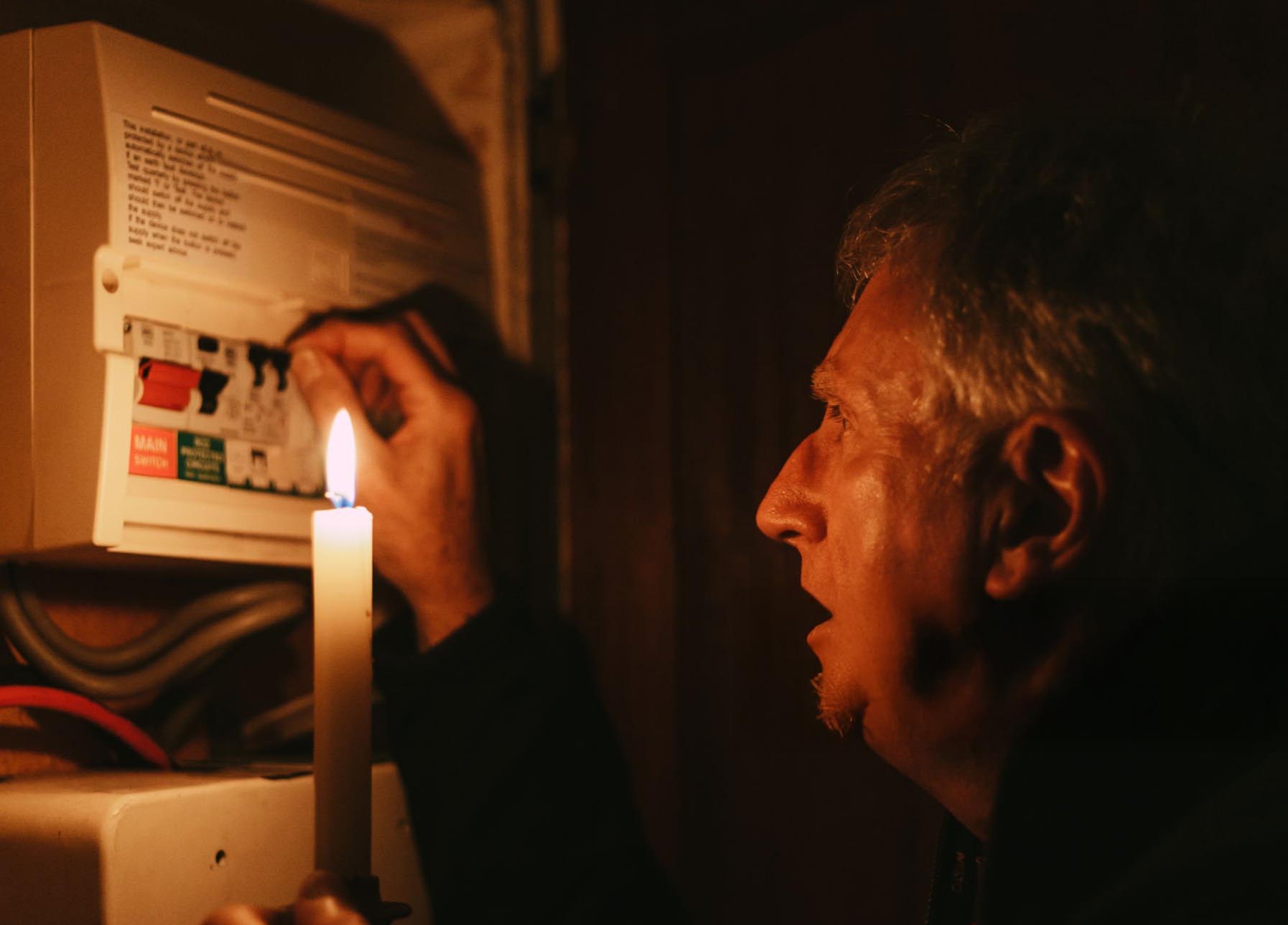
Step 3: Check Your Circuit Breaker Panel
If the outage appears to be limited to your apartment, locate your circuit breaker panel.
A breaker may trip when a circuit becomes overloaded or experiences an electrical fault. A tripped breaker may appear slightly different from the others or sit between the ON and OFF positions.
Look carefully at the breakers.
If you find one that appears tripped, move it completely to the OFF position first. Then move it back to ON.
This may restore power to the affected circuit.
Important safety rule
If the breaker immediately trips again, do not keep resetting it.
Repeated tripping can indicate a short circuit, overloaded circuit, faulty appliance, or wiring problem that requires professional attention.
Step 4: Unplug Appliances Before Resetting a Tripped Breaker
If you know which appliances were operating when the power went out, unplug unnecessary devices before resetting the breaker.
Pay particular attention to high-power appliances such as:
- Space heaters
- Microwaves
- Electric kettles
- Air conditioners
- Hair dryers
- Washing machines
- Portable heaters
- Other high-wattage appliances
Too many high-power devices operating on the same circuit can overload it.
After unplugging unnecessary appliances, you can try resetting the breaker once.
If it stays on, reconnect appliances one at a time. If the breaker trips again after connecting a particular appliance, stop using that appliance and have it checked.
Step 5: Check GFCI Outlets
If only part of your apartment has lost power, check your GFCI outlets.
GFCI outlets commonly have TEST and RESET buttons and are often installed in bathrooms, kitchens, laundry areas, and other locations where electrical equipment may come into contact with water.
Press the RESET button if it has tripped.
If power returns, the GFCI may have been the reason the downstream outlets stopped working.
However, if the GFCI immediately trips again, don’t repeatedly reset it. An electrical fault may need professional diagnosis.
Step 6: Check Which Areas Still Have Electricity
After resetting a breaker or GFCI, test different parts of the apartment.
Check:
- Bedroom lights
- Living room outlets
- Kitchen appliances
- Bathroom outlets
- Air conditioning
- Wi-Fi router
- Other essential devices
If some areas have power while others don’t, the issue may be limited to one circuit.
This information is useful when speaking with your landlord, building management, or electrician.

Step 7: Check the Apartment’s Main Electrical Switch
Some apartments have a main electrical disconnect or additional switch near the meter or electrical panel.
If your building provides access to a main switch, check whether it has been turned off.
However, do not open sealed electrical equipment or attempt to repair the meter, service wiring, or building electrical system yourself.
If you aren’t sure what a switch does, leave it alone and contact building management.
Step 8: Contact Your Landlord or Building Management
If the breakers and GFCI outlets appear normal but your apartment still has no power, contact your landlord or property manager.
Tell them:
- When the power stopped working
- Whether neighbors have electricity
- Whether the whole apartment is affected
- Whether any breakers tripped
- Whether a GFCI was reset
- Whether you noticed burning smells, sparks, or other unusual signs
This information can help maintenance staff identify the problem more quickly.
Step 9: Check With Your Electricity Provider
If the problem affects your building or neighborhood, check for a utility outage.
Possible causes include:
- Severe weather
- Damaged power lines
- Transformer failure
- Planned maintenance
- Equipment problems
- Grid faults
If the utility company confirms an outage, there may be nothing you can safely repair inside the apartment. Keep your refrigerator and freezer closed and conserve battery power while waiting for electricity to return.
Step 10: Protect Your Electronics
Power restoration can sometimes cause electrical surges or fluctuations.
During a prolonged outage, consider unplugging sensitive electronics such as:
- Computers
- Televisions
- Gaming consoles
- Routers
- Chargers
- Audio equipment
You can leave one light switched on so you know when electricity returns.
A surge protector can provide additional protection for compatible electronics, while a UPS can help keep important devices such as routers and computers running through short interruptions.
Step 11: Keep Your Refrigerator Closed
If you are waiting for power to return, avoid repeatedly opening the refrigerator.
A closed refrigerator generally keeps food cold for about 4 hours. A full freezer can stay cold for approximately 48 hours, while a half-full freezer may last around 24 hours.
If the outage lasts longer, move perishable food to a cooler with ice or frozen gel packs when possible.
Don’t use smell or appearance alone to determine whether food is safe after a prolonged outage.
Step 12: Use Safe Backup Power
If you need electricity while waiting for the grid to return, an apartment-friendly option is a portable battery power station.
Depending on its capacity, a battery power station can run:
- Phones
- Wi-Fi routers
- LED lights
- Laptops
- Tablets
- Fans
- Small electronics
A UPS can also provide short-term backup for routers, modems, computers, and other sensitive electronics.
Never use a fuel generator indoors
Do not operate gasoline- or propane-powered generators inside an apartment, garage, basement, enclosed balcony, or other enclosed area.
Carbon monoxide from fuel-burning generators is colorless and odorless and can be deadly.
Portable generators should be operated outdoors and at least 20 feet away from the home, with exhaust directed away from windows, doors, and vents.
For apartment renters, battery-based backup power is usually a much more practical option.
Step 13: Know When to Call an Electrician
You should contact a qualified electrician if you cannot safely identify or restore the problem.
Professional help is especially important when:
- A breaker repeatedly trips
- An outlet becomes hot
- You smell burning
- You see sparks
- Wiring is damaged
- A GFCI repeatedly trips
- Lights flicker frequently
- Power keeps going on and off
- Electrical equipment has been exposed to water
- The electrical panel appears damaged
Never attempt to repair live wiring or replace electrical components if you aren’t qualified.
What If Power Still Doesn’t Come Back?
If you have checked the breakers and GFCI outlets and power still isn’t working, don’t keep experimenting with the electrical system.
At this point, the problem may involve:
- Building electrical equipment
- Your apartment’s service connection
- A damaged circuit
- Utility equipment
- A faulty meter
- Internal wiring
Contact the appropriate professional rather than trying to diagnose or repair complex electrical equipment yourself.
What to Do When Power Returns
When electricity comes back, don’t immediately turn on every appliance.
Instead:
- Confirm that lights are working normally.
- Check for unusual smells, sounds, or sparks.
- Make sure breakers remain on.
- Plug sensitive electronics back in gradually.
- Check your refrigerator and freezer.
- Restart essential appliances one at a time.
- Watch for flickering or repeated breaker trips.
If anything seems abnormal, switch off the affected equipment and contact building management or an electrician.

Frequently Asked Questions
How do I restore power to my apartment?
First determine whether the outage is inside your apartment or affects the building. If only your apartment is affected, safely check the circuit breaker panel and GFCI outlets. If the breaker trips again or you see electrical warning signs, contact a qualified professional.
Why won’t my breaker stay on?
A breaker that immediately trips again may indicate an overloaded circuit, faulty appliance, short circuit, or wiring problem. Don’t repeatedly reset it.
What should I do if only one room has no power?
Check the circuit breakers and nearby GFCI outlets. A single circuit or GFCI may be responsible. If you cannot restore power safely, contact maintenance or an electrician.
Can I restore apartment power myself?
You can usually perform basic checks such as identifying a tripped breaker or resetting a GFCI outlet if the equipment is accessible and there are no signs of danger. Electrical repairs should be handled by qualified professionals.
Should I unplug appliances during a power outage?
Unplugging sensitive electronics can help protect them from voltage fluctuations when electricity returns. Consider unplugging computers, TVs, gaming systems, and other sensitive equipment.
Can I use a generator to restore power in an apartment?
Never operate a fuel-burning portable generator inside an apartment. For apartment backup power, a battery power station or UPS is generally a safer alternative.
Final Thoughts
Restoring power in an apartment usually starts with a simple process: check the extent of the outage, look for electrical hazards, inspect the breaker panel, check GFCI outlets, and contact building management if the problem isn’t resolved.
Never repeatedly reset a breaker that keeps tripping, and never attempt electrical repairs that you aren’t qualified to perform.
For frequent outages, prepare in advance with flashlights, power banks, a portable battery power station, emergency lighting, and other essential supplies. A little preparation can make the next apartment power outage much easier and safer to handle.
Meta Description: Learn how to restore power in an apartment step by step. Check breakers, GFCI outlets, appliances, and know when to call an electrician.
Must Read= How to Reduce Your Electric Bill in an Apartment Without Solar (2026 Guide)