


When the power suddenly stops working in your apartment, the cause could be a neighborhood outage, a tripped circuit breaker, an electrical problem, or an issue with the building’s power supply.
Before assuming there is a major electrical problem, there are several simple and safe checks you can make. This guide explains why your apartment may have no power, what to check first, and when to call your landlord, building management, or an electrician.
1. Check Whether the Whole Building Has Lost Power
The first thing to determine is whether the problem is limited to your apartment.
Look outside your apartment and check:
- Are the hallway lights working?
- Is the elevator operating?
- Do your neighbors have electricity?
- Are outdoor or street lights working?
- Is there a power outage in the surrounding area?
If the entire building or neighborhood is without electricity, the problem is probably with the utility company or the building’s main electrical system.
In that situation, repeatedly resetting your apartment’s breakers will not restore power. Contact your building management or local electricity provider for outage information.
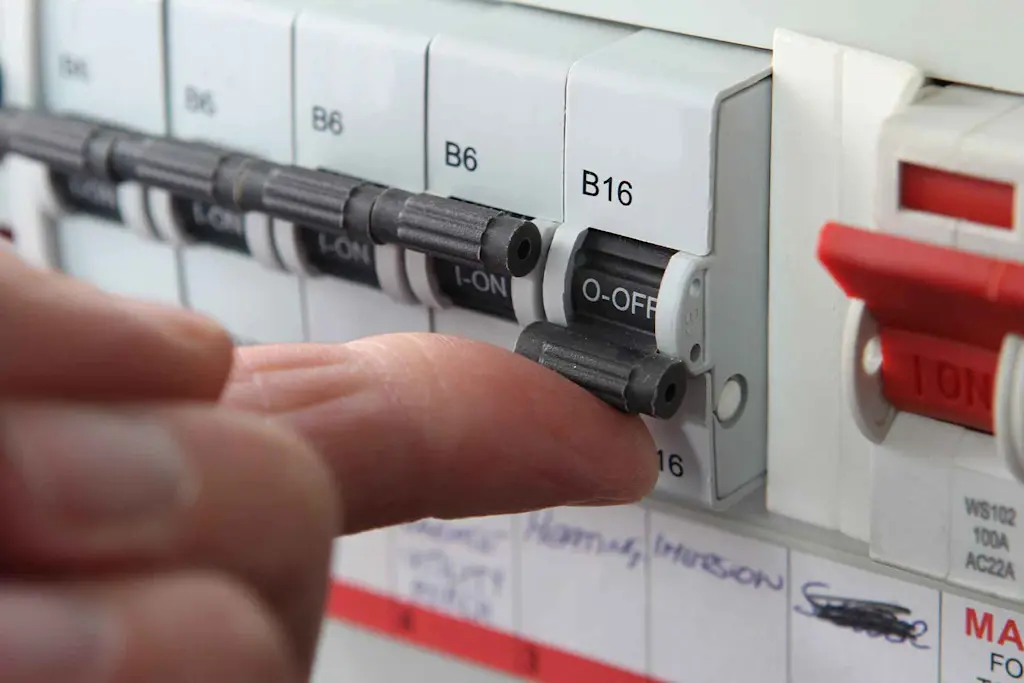
2. Check Your Circuit Breaker Panel
If other apartments have electricity but yours does not, check your electrical panel if you can safely access it.
A circuit breaker can trip when a circuit experiences an overload or electrical fault. Circuit breakers are designed to shut off electricity when the current becomes unsafe.
Look for a breaker that appears to be:
- Completely switched to OFF
- Between ON and OFF
- Different from the other breakers
If you identify a tripped breaker, switch it fully to OFF first and then back to ON.
However, do not repeatedly reset a breaker that immediately trips again. A breaker that keeps tripping may indicate an overloaded circuit, faulty appliance, short circuit, or wiring problem. CPSC recommends investigating the reason for a trip rather than simply resetting the breaker repeatedly.
3. Check for a Tripped GFCI Outlet
Sometimes the problem affects only certain outlets or rooms.
A GFCI, or ground-fault circuit interrupter, can shut off electricity when it detects an electrical leakage that could create a shock hazard.
GFCI outlets are commonly found in areas such as:
- Bathrooms
- Kitchens
- Laundry areas
- Outdoor locations
Look for an outlet with TEST and RESET buttons. If the outlet has tripped, pressing RESET may restore power.
If the GFCI immediately trips again, don’t continue resetting it. There may be an electrical fault that requires professional inspection. GFCI protection is specifically designed to shut off power quickly when it detects a dangerous imbalance.
4. Check if Only One Room Has No Power
If the entire apartment isn’t dark, the issue may be limited to one electrical circuit.
For example, you might have:
- Lights working but outlets not working
- Kitchen without electricity
- Bedroom outlets without power
- Bathroom outlets without power
- Air conditioner not working while other appliances work
This often points toward a tripped breaker, GFCI, overloaded circuit, or local wiring issue.
Try to identify exactly which rooms or outlets are affected before contacting maintenance. This information can help an electrician diagnose the problem faster.
5. Unplug High-Power Appliances
An overloaded circuit can cause a breaker to trip.
High-power appliances may include:
- Space heaters
- Microwaves
- Air conditioners
- Electric kettles
- Hair dryers
- Washing machines
- Portable heaters
- Large kitchen appliances
If the power went out immediately after using several appliances at the same time, unplug unnecessary devices before checking the breaker.
Don’t overload electrical circuits by connecting too many high-current appliances to the same circuit. CPSC warns that overloaded circuits can create electrical hazards.

6. Check Whether Your Apartment Has a Main Switch
Some apartment buildings have additional electrical controls between the apartment and the building’s main electrical system.
Depending on the building, there may be:
- A main breaker
- A meter box
- A distribution panel
- A building-level electrical disconnect
These systems vary considerably by property and location.
Do not open sealed electrical equipment or attempt repairs yourself. If you suspect a problem with the building’s main electrical equipment, contact your landlord, property manager, or a qualified electrician.
7. Ask Your Landlord or Building Management
If your apartment has no electricity but neighboring apartments do, contact building management.
The building may have:
- A maintenance problem
- A faulty meter
- A damaged electrical connection
- A building-level breaker problem
- Scheduled electrical work
- An issue with your apartment’s electrical service
Apartment residents generally should not attempt to repair building electrical equipment themselves.
8. Check for Signs of an Electrical Emergency
Not every power outage is a simple breaker problem.
Leave the area and seek professional help if you notice:
- Burning smells
- Smoke
- Sparks
- Buzzing or crackling from electrical equipment
- Melted outlets
- Blackened switches
- Hot electrical outlets
- Damaged wiring
- A breaker that repeatedly trips
- Water near electrical equipment
Warm or hot outlets and switches can indicate an unsafe wiring condition, according to CPSC safety guidance.
If there is smoke or fire, don’t attempt to repair the electrical system yourself. Leave the apartment and contact emergency services.
9. What If the Power Went Out After a Storm?
Storms can cause electrical outages through:
- Damaged power lines
- Fallen trees
- Flooding
- Transformer problems
- Building electrical damage
If your apartment or electrical equipment has been exposed to water, don’t touch wet electrical equipment while it is connected to power. CPSC recommends having electrical systems and equipment evaluated by qualified professionals after water exposure.
Never enter standing water to reach electrical equipment.
10. Keep Your Refrigerator and Freezer Closed
If the apartment loses power completely, avoid opening your refrigerator unnecessarily.
A closed refrigerator generally keeps food cold for about 4 hours. A full freezer can remain cold for approximately 48 hours, while a half-full freezer may last around 24 hours.
The less you open the doors, the longer the food can remain cold.
If the outage continues, use a cooler with ice or frozen gel packs to keep perishable food at a safe temperature.
11. Use Flashlights Instead of Candles
When your apartment suddenly loses electricity, your first priority should be safety.
Use:
- Flashlights
- Battery-powered lanterns
- Rechargeable emergency lights
- Battery-powered headlamps
Avoid using candles when possible because an unattended open flame can create a fire risk.
Keep a flashlight somewhere that is easy to find during a nighttime outage.


12. Don’t Use a Generator Inside Your Apartment
Never bring a gasoline- or propane-powered portable generator inside your apartment.
Do not use one in:
- A bedroom
- Living room
- Kitchen
- Garage
- Basement
- Enclosed balcony
- Storage room
Opening windows or doors does not make indoor generator operation safe because carbon monoxide can build up to dangerous levels. CPSC recommends operating portable generators outdoors and at least 20 feet away from the home, with exhaust directed away from the building.
For apartment renters, a portable battery power station is often a more practical backup option because it does not produce combustion exhaust.
13. Consider a Portable Power Station
If apartment outages happen frequently, a battery power station can provide temporary electricity for essential devices.
Depending on its capacity, it may power:
- Phones
- Wi-Fi routers
- Laptops
- LED lights
- Fans
- Tablets
- Small electronics
For example, a 300Wh-class power station can be useful for basic electronics, while larger 500–1000Wh units can provide longer backup for multiple devices.
A UPS can also be useful for keeping a router, modem, computer, or other sensitive electronics running during short interruptions.
14. When Should You Call an Electrician?
Call a qualified electrician if:
- The breaker keeps tripping
- An outlet is hot
- You smell burning
- You see sparks
- Wiring looks damaged
- Multiple outlets suddenly stop working
- A GFCI repeatedly trips
- You suspect a short circuit
- Power comes and goes unexpectedly
- You hear buzzing or crackling from electrical equipment
Don’t attempt electrical repairs if you aren’t qualified.
A power outage can sometimes be the warning sign of a larger electrical problem, so repeated failures should not be ignored.
Frequently Asked Questions
Why is there no power in my apartment but my neighbors have power?
The problem may be inside your apartment. Check your circuit breaker panel and GFCI outlets. If those appear normal, contact building management or an electrician.
Why did my apartment breaker trip?
A breaker can trip because of an overloaded circuit, faulty appliance, short circuit, or another electrical fault. If it trips again immediately after being reset, stop resetting it and have the problem investigated.
Why do some outlets work while others don’t?
Different outlets and appliances may be connected to different circuits. A tripped breaker or GFCI may therefore affect only part of your apartment.
Should I reset a breaker that keeps tripping?
No. If a breaker immediately trips again, there may be an underlying electrical problem. Repeatedly resetting it can be unsafe.
How long will food stay safe during an apartment power outage?
A closed refrigerator generally keeps food cold for about 4 hours. After that, perishable food needs careful temperature-based evaluation and may need to be discarded.
Can I use a generator on my apartment balcony?
A balcony is not automatically a safe location for a fuel-burning generator. Portable generators should be operated outdoors and at least 20 feet from the home, with exhaust directed away from the building.
Final Thoughts
If the power isn’t working in your apartment, start by determining whether the outage affects only your apartment or the entire building. Then safely check the circuit breaker panel and GFCI outlets.
If resetting a breaker doesn’t solve the problem, or the breaker keeps tripping, don’t keep experimenting. Contact your landlord, building management, utility provider, or a qualified electrician.
Most importantly, treat smoke, sparks, burning smells, hot outlets, damaged wiring, and water near electrical equipment as serious warning signs. Your priority should always be electrical safety rather than getting the power back as quickly as possible.
Meta Description: Why is the power not working in your apartment? Learn what to check, how to reset a breaker safely, and when to call an electrician.
Must Read= How to Reduce Your Electric Bill in an Apartment Without Solar (2026 Guide)