A power outage can leave an apartment without lighting, Wi-Fi, heating or cooling, and sometimes even reliable access to emergency information. A good emergency radio for an apartment provides an independent way to monitor news, weather alerts, and emergency instructions when the electricity and internet are unavailable.
If you want a radio that works without disposable batteries, look for a model with hand-crank charging and solar charging. These radios can generate their own power, making them particularly useful during extended blackouts.
The best apartment emergency radios are compact, easy to store, simple to operate, and capable of receiving important broadcasts. Many also include a flashlight and USB output for emergency phone charging.
What Is the Best Emergency Radio for an Apartment?
For most apartments, the Midland ER310 is one of the strongest all-around choices because it combines hand-crank and solar charging with AM/FM and weather-band reception, a flashlight, and phone-charging capability. Other strong options include the Kaito KA500 for broader radio-band coverage, the Eton Odyssey for portability, and the RunningSnail models for budget-conscious emergency kits.
However, the best choice depends on your apartment size, budget, radio reception, storage space, and whether you need additional features such as a large power bank.
Why Apartments Need an Emergency Radio
Apartments can be especially dependent on the electrical grid.
During an outage, you may lose:
- Internet access
- Wi-Fi
- Television
- Electric lighting
- Air conditioning
- Heating
- Elevator service
- Charging for phones and other devices
A smartphone can provide emergency information, but it has a major limitation: its battery eventually runs out.
An emergency radio provides an independent communication and information source. A hand-crank model can continue operating even when there is no electricity and no replacement battery available.
Current emergency-radio guides commonly recommend multiple charging methods, particularly hand crank and solar, because having more than one power source improves resilience during a prolonged outage.
Best Emergency Radios for Apartments Without Batteries
1. Midland ER310 — Best Overall
The Midland ER310 is a strong choice for apartment emergency preparedness because it combines several useful features in a relatively compact design.
It can use solar charging and hand-crank power, allowing you to keep it operating without depending entirely on disposable batteries. It also provides AM/FM and weather-band reception and includes a flashlight and USB charging capability.
Why It Is Good for Apartments
- Hand-crank charging
- Solar charging
- AM/FM reception
- Weather-band reception
- Built-in flashlight
- USB charging capability
- Portable design
- Useful for emergency kits
Best for: Apartment residents who want a reliable all-purpose emergency radio.
2. Kaito KA500 — Best for Radio-Band Coverage
The Kaito KA500 is a particularly interesting option if you want more than basic AM/FM and weather reception.
It supports multiple radio bands, including AM, FM, shortwave, and weather channels, while also offering several power options such as hand crank and solar charging.
Shortwave can be useful when you want access to a broader range of broadcasts.
Why Choose the Kaito KA500?
- AM/FM reception
- Shortwave reception
- Weather-band reception
- Hand-crank charging
- Solar charging
- Multiple power options
- Built-in lighting
Best for: People who want broad radio-band coverage and additional listening options.
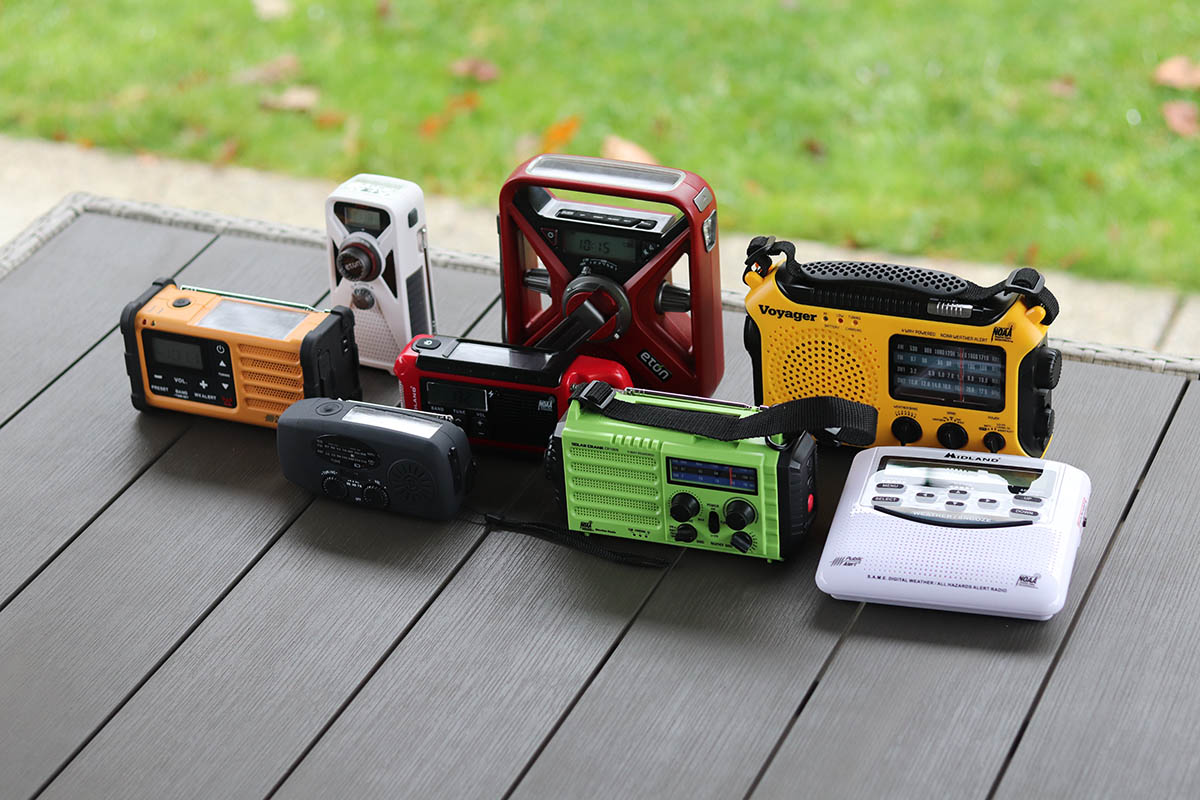
3. Eton Odyssey — Best Compact Option
The Eton Odyssey is another strong choice for apartment emergency kits. Travel + Leisure’s 2026 emergency-radio roundup selected it as its overall pick and highlighted its emergency-focused design and multiple power sources.
Its portability makes it convenient for apartments where storage space may be limited.
Why It Works Well in Apartments
A good apartment emergency device should not take up much space. The Eton Odyssey can be stored in:
- A kitchen cabinet
- Emergency supply box
- Bedroom drawer
- Hallway closet
- Backpack
Best for: Apartment residents who prioritize portability and compact storage.
4. RunningSnail Emergency Radio — Best Budget Choice
If you want an affordable emergency radio for a basic apartment emergency kit, RunningSnail models are worth considering.
The MD-090, for example, combines hand-crank, solar, and USB charging with a flashlight and emergency features. A 2026 comparison listed it as a budget-oriented choice.
Best Features
- Affordable
- Hand-crank charging
- Solar charging
- USB charging
- Flashlight
- Compact design
- Emergency signaling features on some models
Best for: People building an emergency kit on a limited budget.
What Does “No Batteries Needed” Really Mean?
This is an important distinction.
A radio advertised as “no batteries needed” generally means you can operate or recharge it through another power source, such as:
- Hand crank
- Solar panel
- USB power
- AC power
Many emergency radios still contain an internal rechargeable battery. The difference is that you can recharge that battery without relying on disposable AA or AAA batteries.
A hand-crank radio is particularly useful because it can generate electricity mechanically.
Solar charging provides another backup method, although small integrated solar panels generally work best as a supplementary charging source rather than a fast replacement for a wall charger. Testing and reviews have noted that solar performance can vary substantially with panel size and sunlight conditions.
How Does a Hand-Crank Emergency Radio Work?
A hand-crank radio contains a small generator.
When you turn the crank, mechanical energy is converted into electrical energy. That electricity can power the radio directly or recharge its internal battery, depending on the design.
This means you can continue using the radio during a prolonged blackout without:
- Electricity
- Disposable batteries
- Internet
- Wi-Fi
The main disadvantage is that you have to physically crank the radio, and the amount of usable energy generated is limited.
For this reason, hand-crank charging should be considered an emergency backup rather than a convenient everyday charging method.
Are Solar Emergency Radios Good for Apartments?
Yes, but solar charging has limitations.
An apartment may have limited access to direct sunlight, especially if you live in:
- A high-rise building
- A north-facing apartment
- An apartment surrounded by other buildings
- A unit without a balcony
A small solar panel can still help maintain the internal battery when sufficient sunlight is available, but you should not assume that a tiny built-in panel will rapidly recharge a depleted battery.
For apartment use, hand crank + solar is better than solar alone because the crank gives you a power source when sunlight is unavailable.
Important Features to Look For
Before buying an emergency radio for your apartment, consider these features.
1. Hand-Crank Charging
This is one of the most important features if your goal is to avoid disposable batteries.
2. Solar Charging
Solar charging gives you another way to replenish the radio during daylight.
3. Weather-Band Reception
If you’re in the United States, NOAA Weather Radio compatibility can be particularly useful for receiving weather information and emergency alerts. NOAA weather radio is specifically designed to provide continuous weather information and warnings.
If you live outside the U.S., check which emergency broadcast services operate in your country before choosing a radio based on NOAA functionality.
4. Built-In Flashlight
A flashlight is extremely useful during an apartment blackout.
Instead of storing a separate radio and flashlight, a multifunction emergency radio can combine both.
5. USB Phone Charging
Some emergency radios can function as small power banks.
This does not necessarily mean they can fully recharge a modern smartphone multiple times. However, having enough power for an emergency call or text can be valuable.
6. Compact Size
Apartment storage space is often limited.
Choose a model that can easily fit inside your emergency supply box or drawer.
7. Simple Controls
During an emergency, complicated controls are a disadvantage.
Look for:
- Clearly labeled buttons
- Easy-to-read tuning
- Simple power controls
- A visible flashlight switch

Where Should You Keep an Emergency Radio in an Apartment?
Keep your emergency radio somewhere that is:
Easy to reach, easy to remember, and protected from unnecessary moisture.
Good locations include:
- Emergency supply cabinet
- Bedroom nightstand
- Hallway storage
- Kitchen emergency drawer
- Near your main emergency kit
Avoid placing it in a basement storage area if you live in a building where flooding is possible.
The most important thing is that everyone in the household knows where it is.
How to Use an Emergency Radio During a Power Outage
When the electricity goes out:
Step 1: Check the Radio
Make sure the radio has some stored charge.
Step 2: Turn on the Appropriate Band
Use AM, FM, or the applicable emergency/weather band available in your area.
Step 3: Extend the Antenna
If the radio has a telescoping antenna, extending it may improve reception.
Step 4: Listen for Official Information
Look for information about:
- Weather conditions
- Power restoration
- Evacuation instructions
- Road closures
- Emergency shelters
- Safety warnings
Step 5: Conserve Power
Do not leave the radio running unnecessarily if power is limited.
Use the hand crank or solar panel when additional charging is required.
Emergency Radio vs. Smartphone
A smartphone is useful, but it should not be your only emergency information source.
| Feature | Emergency Radio | Smartphone |
|---|---|---|
| Works without internet | Yes | Limited |
| Requires cell service | No | Often |
| Can use hand-crank power | Some models | No |
| Built-in emergency broadcasts | Some models | App/network dependent |
| Flashlight | Many models | Yes |
| Two-way communication | Usually no | Yes |
| Battery independent | Some models | No |
The best emergency setup is not necessarily radio versus smartphone.
It is radio + charged phone + backup power.
How to Build an Apartment Emergency Communication Kit
A good apartment emergency communication kit can include:
- Hand-crank/solar emergency radio
- Flashlight
- Spare batteries for other devices
- Power bank
- Charging cables
- Whistle
- Portable lighting
- Printed emergency contacts
- Emergency information for your local area
If you live in an apartment building, also keep information about your building’s emergency exits and evacuation procedures.
Frequently Asked Questions
What is the best emergency radio without batteries?
A hand-crank and solar emergency radio is the best type if you want to minimize dependence on disposable batteries. Models such as the Midland ER310, Kaito KA500, Eton Odyssey, and RunningSnail options are among the commonly recommended choices in 2026 guides.
Can a hand-crank radio work forever?
It can continue operating as long as you have a functioning crank mechanism and are willing to generate power manually. However, individual components can eventually wear out.
Does solar charging work during a power outage?
Yes. Solar charging does not require grid electricity. However, charging speed depends on sunlight, panel size, weather, and the radio’s charging system.
Can an emergency radio charge a phone?
Many emergency radios include USB output for phone charging. However, their small internal batteries may provide limited phone charging, so they should not be considered a replacement for a dedicated power bank.
Do I need NOAA Weather Radio?
That depends on where you live. NOAA Weather Radio is particularly relevant to U.S. residents. If you live elsewhere, choose a radio compatible with the emergency and weather broadcast systems used in your country.
Is a hand-crank radio better than a battery radio?
For emergency preparedness, a hand-crank radio provides an important advantage because it can generate power without disposable batteries or a wall outlet. The best setup is usually a radio with multiple power options, rather than relying on only one method.
Final Verdict
For apartment emergency preparedness, the best choice is generally a compact radio with hand-crank and solar charging, emergency/weather-band reception appropriate to your country, a flashlight, and USB phone charging.
The Midland ER310 stands out as a strong overall option, while the Kaito KA500 is attractive for broader radio-band coverage. The Eton Odyssey is a good compact choice, and RunningSnail models can make sense when keeping costs low.
Most importantly, don’t choose an emergency radio based only on the word “solar.” For an apartment, having two independent charging methods—especially hand crank plus solar—provides much better resilience.
Store the radio somewhere accessible, test it periodically, and make sure you know how to operate it before an actual emergency occurs. A small amount of preparation can make a major difference when the lights, internet, and phone networks are no longer dependable.
Must Read= Can You Sue Your Electric Company for a Power Outage?
Must Read= How to Prime a Well Pump After a Power Outage (Step-by-Step)