How much water should you store per person for an emergency? The general recommendation is to store at least 1 gallon of water per person per day. For a basic emergency supply, plan for 3 gallons per person for 3 days. If you have enough space, the CDC recommends trying to maintain a 2-week supply, which equals 14 gallons per person.
However, your household may need more than this minimum. Hot weather, illness, pregnancy, physical activity, pets, and additional sanitation needs can increase water requirements.
How Much Emergency Water Does One Person Need?
A practical emergency water-storage formula is:
1 person × 1 gallon × number of emergency days = total water needed
| Emergency Duration | Water Per Person |
|---|---|
| 1 day | 1 gallon |
| 3 days | 3 gallons |
| 7 days | 7 gallons |
| 14 days | 14 gallons |
| 30 days | 30 gallons |
The 3-day supply is a good minimum starting point. The CDC recommends trying to build toward a 2-week emergency water supply when possible.
Why One Gallon Per Day?
The one-gallon guideline isn’t intended to represent drinking water alone. Emergency water may also be needed for cooking, brushing teeth, and other basic uses. FEMA guidance also notes that individual needs vary according to factors such as age, health, activity level, diet, and climate.
A normally active adult may drink considerably less than one gallon in a day, but the additional water provides a safety margin for essential household needs.
How Much Water Does a Family Need?
To calculate your household’s emergency water requirement, multiply the number of people by the number of days you want to prepare for.
Family of 2
For two people:
- 3 days: 6 gallons
- 7 days: 14 gallons
- 14 days: 28 gallons
Family of 4
For a four-person household:
- 3 days: 12 gallons
- 7 days: 28 gallons
- 14 days: 56 gallons
The FDA specifically gives 12 gallons for a family of four for three days as an example based on the one-gallon-per-person-per-day recommendation.
Family of 6
For six people:
- 3 days: 18 gallons
- 7 days: 42 gallons
- 14 days: 84 gallons
A simple emergency-planning formula makes it easy to calculate the amount for any household:
Number of people × 1 gallon × number of days = recommended minimum
Should You Store More Than 1 Gallon Per Person Per Day?
Yes, in certain situations. One gallon per person per day is a minimum planning guideline, not a universal maximum.
The CDC recommends considering additional water for pregnant women, people who are sick, pets, and people living in hot climates.
You may also want extra water if:
- Your area experiences extreme heat
- Household members perform heavy physical activity
- You have infants or young children
- Someone in the household has special medical needs
- You have several pets
- Your emergency may last longer than expected
- You live in an apartment where obtaining additional water could be difficult during an outage
FEMA also notes that hot temperatures can substantially increase water needs.
How Much Water Should You Store for Pets?
Pets should be included in your emergency water calculation.
Current CDC emergency guidance recommends considering at least 1 gallon per day for each person and each pet, with additional water potentially needed in hot climates or other demanding conditions.
For example, a household with:
- 2 adults
- 1 child
- 1 dog
should not calculate its emergency supply for only three people. The pet needs its own water supply.
For long-term preparedness, keeping separate containers for pets can make it easier to manage and rotate the supply.
How Much Water Should You Store for 2 Weeks?
A two-week supply is a strong preparedness target if you have adequate storage space.
The calculation is:
1 gallon × 14 days = 14 gallons per person
Examples:
| Household | 14-Day Minimum |
|---|---|
| 1 person | 14 gallons |
| 2 people | 28 gallons |
| 3 people | 42 gallons |
| 4 people | 56 gallons |
| 5 people | 70 gallons |
| 6 people | 84 gallons |
The CDC specifically recommends trying to store a two-week supply when possible.
For apartment residents, however, storing dozens of gallons can be difficult. In that situation, start with the 3-day minimum and gradually increase your supply.
Bottled Water vs. Water Storage Containers
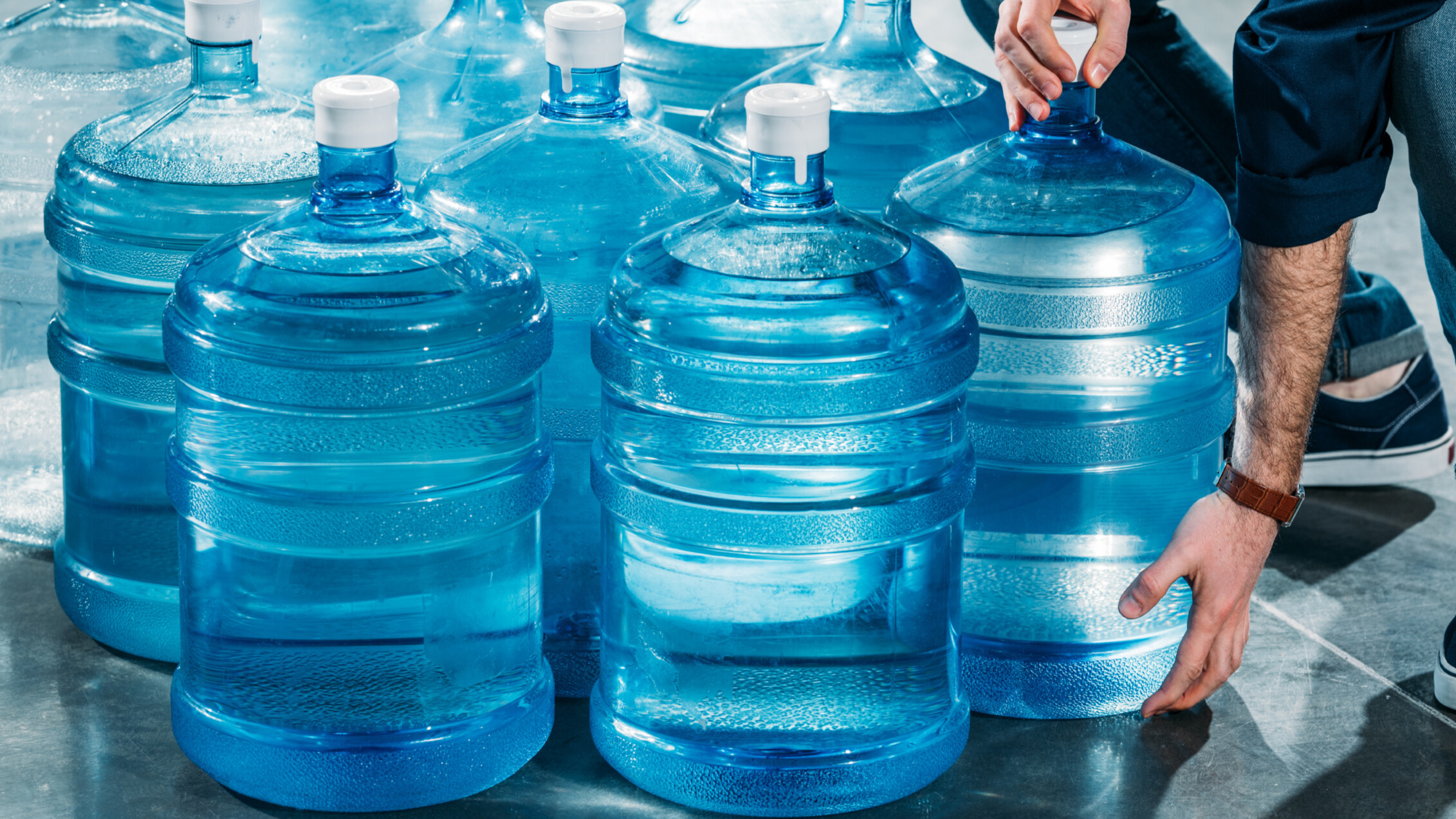
When preparing an emergency water supply, you have two common options: commercially bottled water or water stored in dedicated containers.
The CDC says unopened commercially bottled water is the safest and most reliable source during an emergency.
If you fill your own containers, use food-grade water storage containers designed for storing drinking water. Avoid containers that previously held chemicals, fuel, cleaning products, or other substances.
The container should have a secure lid and should be kept away from contamination.
Where Should You Store Emergency Water?
Proper storage is just as important as the quantity.
The CDC recommends keeping stored water in a cool location away from direct sunlight and away from toxic substances such as gasoline and pesticides. For home-filled water, CDC guidance recommends replacing the water every six months.
Good storage locations may include:
- A cool basement
- A dedicated emergency-storage area
- A pantry
- A closet away from heat
- A suitable utility-storage area
Avoid placing large water containers somewhere where a leak could damage electrical equipment, flooring, furniture, or important belongings.
How Long Does Emergency Water Last?
The answer depends on how the water is packaged and stored.
Commercially bottled water: Follow the manufacturer’s expiration or use-by guidance and keep the bottles sealed until needed.
Home-filled containers: The CDC recommends replacing the stored water every six months.
Label home-filled containers with the date they were filled. This makes rotating your emergency supply much easier.
What Can Emergency Water Be Used For?
During a water outage or disaster, your emergency supply may be needed for more than drinking.
Prioritize stored water for:
- Drinking
- Cooking
- Brushing teeth
- Preparing infant formula or necessary food
- Essential hygiene and sanitation
The CDC recommends using safe water for drinking, cooking, brushing teeth, and other uses when an emergency affects the water supply.
Avoid wasting drinking-quality emergency water on unnecessary activities.
What If You Run Out of Stored Water?
If your emergency lasts longer than expected, don’t automatically assume that untreated water is safe.
Potential alternative water sources may include commercially bottled water or other sources that can be appropriately treated. The CDC provides specific instructions for making potentially contaminated water safer, including appropriate disinfection methods.
Water contaminated with fuel or toxic chemicals cannot simply be made safe by boiling or disinfecting it.
When an emergency occurs, follow instructions from your local water authority or emergency-management agency.
Emergency Water Storage Checklist
Use this checklist to build a household water supply:
- Calculate the number of people in your household
- Include pets in your planning
- Start with at least 3 days of water
- Aim for 14 days if practical
- Store at least 1 gallon per person per day
- Use commercially bottled water or food-grade containers
- Keep containers away from sunlight
- Store water in a cool location
- Keep water away from chemicals and fuel
- Label home-filled containers with the storage date
- Replace home-filled water every six months
- Keep additional water for hot weather or special needs
Frequently Asked Questions
Is 1 gallon of water per person per day enough?
One gallon per person per day is the standard minimum emergency-planning recommendation. It provides water for drinking and other essential household needs. Individual requirements can be higher depending on climate, health, age, activity, and other circumstances.
How much water should I store for 3 days?
Store at least 3 gallons per person for a three-day emergency supply.
For four people, that means 12 gallons.
How much water should I store for 7 days?
For a seven-day emergency, store at least 7 gallons per person.
A household of four would therefore need 28 gallons.
How much water should I store for 14 days?
For two weeks, plan for 14 gallons per person.
For four people, the minimum would be 56 gallons.
Should I store water for my pets?
Yes. Pets should be included in your emergency water plan. CDC guidance recommends considering at least 1 gallon per day for each person and each pet, with additional water when conditions require it.
Can I store tap water for emergencies?
Yes, provided you use clean, appropriate food-grade containers and follow proper storage procedures. The CDC recommends replacing water stored in home-filled containers every six months.
Where is the best place to store emergency water?
Choose a cool, dark location away from direct sunlight, heat, chemicals, gasoline, and pesticides.
Final Answer: How Much Water Should You Store Per Person?
For emergency preparedness, the easiest rule to remember is 1 gallon of water per person per day.
Start with 3 gallons per person for three days, then work toward 14 gallons per person for two weeks if you have enough storage space. Increase your supply when dealing with hot weather, illness, pregnancy, pets, or other special circumstances.
Water is one of the most important items in an emergency kit because you can survive without many everyday conveniences, but you cannot safely go without adequate water. Building your supply gradually is better than waiting until an emergency is already underway.