Power outages can be especially difficult for apartment renters. You may want backup electricity for your refrigerator, phone, Wi-Fi router, laptop, fans, or medical equipment. This often raises an important question: Can you run a generator in an apartment?
The short answer is no—not a gasoline, propane, or other fuel-burning portable generator inside an apartment.
Portable generators produce carbon monoxide (CO), an odorless and colorless gas that can cause serious illness or death. The CDC recommends operating portable generators outdoors and more than 20 feet from windows, doors, and vents.
For most apartment renters, a battery-powered portable power station is a much more practical alternative.
Can You Use a Gas Generator Inside an Apartment?
No. Never operate a fuel-burning portable generator inside an apartment.
This includes using one:
- Inside a living room
- In a bedroom
- In a kitchen
- On an enclosed balcony
- In a garage attached to the building
- In a basement
- In a hallway or storage room
Opening windows or doors does not make indoor generator use safe. Carbon monoxide can build up quickly, and you may not smell or see it.
This is one of the biggest differences between an apartment and a detached house: even if a generator could technically be placed outdoors, apartment renters may not have a safe location that meets the required clearance.
Can You Run a Generator on an Apartment Balcony?
A balcony may seem like the perfect location because it is technically outside, but you should not assume a balcony is safe for a portable fuel-burning generator.
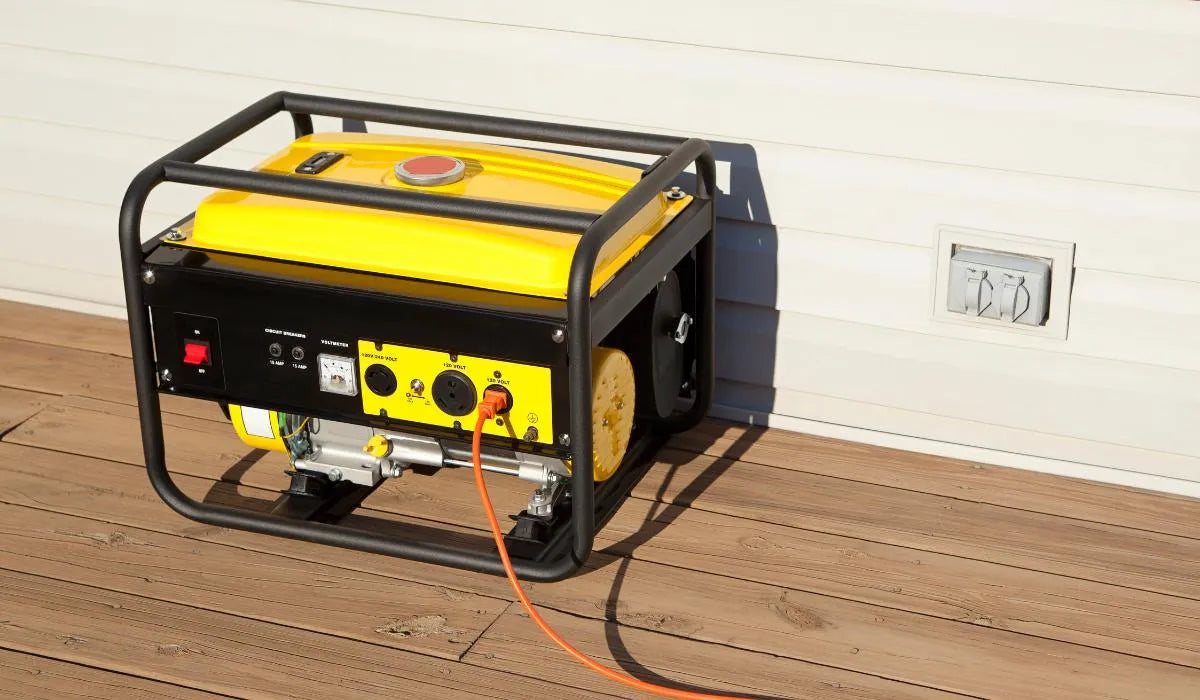
CPSC guidance says portable generators should be operated outdoors at least 20 feet away from the home, with exhaust directed away from the building. It also specifically warns against operating generators on outside porches because they may be too close to the home.
For many apartments, a balcony simply cannot provide the required separation from windows, doors, vents, and neighboring units.
There may also be building rules, fire regulations, lease restrictions, and local laws that prohibit fuel-burning generators on balconies.
Why Are Generators Dangerous Indoors?
The biggest danger is carbon monoxide poisoning.
Carbon monoxide is produced when gasoline, propane, natural gas, or other fuels are burned. It is particularly dangerous because it is:
- Colorless
- Odorless
- Difficult to detect without an alarm
- Potentially fatal at high concentrations
Symptoms of CO poisoning can include headache, dizziness, weakness, nausea, vomiting, chest pain, and confusion.
A person can become seriously ill before realizing there is a problem.
That’s why opening a window is not an adequate solution.
What About a Small Generator?
A smaller generator is not automatically safe indoors.
The amount of electricity a generator produces does not change the fact that a fuel-burning engine produces exhaust.
A small gasoline generator can still produce dangerous levels of carbon monoxide. The CDC says never to use a generator inside a home, basement, or garage.
The same principle applies to compact camping-style fuel generators.

What Should Apartment Renters Use Instead?
For most apartments, the best alternative is a portable power station.
A power station stores electricity in a rechargeable battery instead of producing electricity by burning fuel.
Because it doesn’t have a combustion engine, it doesn’t produce generator exhaust or carbon monoxide.
Depending on its capacity, a power station can provide backup electricity for:
- Smartphones
- Laptops
- Wi-Fi routers
- LED lights
- Fans
- Televisions
- CPAP machines
- Small refrigerators
- Other low- to medium-power devices
This makes battery backup particularly convenient for apartment living.
Portable Power Station vs. Gas Generator
| Feature | Portable Power Station | Fuel Generator |
|---|---|---|
| Fuel required | No | Yes |
| Produces CO | No combustion exhaust | Yes |
| Indoor use | Generally suitable when used as directed | Never |
| Noise | Usually very quiet | Usually louder |
| Maintenance | Low | Regular maintenance |
| Fuel storage | Not required | Required |
| Apartment friendly | Yes | Often problematic |
| Solar charging | Many models | Usually no |
| Long-duration high loads | Depends on battery size | Often better suited |
The main advantage of a traditional generator is its ability to provide substantial power for long periods when fuel is available.
However, for basic apartment backup needs, a battery power station is often simpler and safer.
What Size Power Station Do You Need for an Apartment?
The right size depends on what you want to run.
200–300Wh
A small 200–300Wh power station can be useful for basic emergency needs.
It can typically handle:
- Phones
- Small lights
- Wi-Fi router
- Tablet
- Small electronics
This is a good option if you primarily need communication and internet access during short outages.
500–1,000Wh
A 500–1,000Wh model provides substantially more flexibility.
It may be suitable for:
- Several phone charges
- Laptop
- Router
- Lights
- Fans
- Small appliances
- Some refrigerator backup
This range is often a practical choice for apartment renters who experience occasional outages.
1,000Wh+
A power station with 1,000Wh or more can provide longer backup times and support larger loads.
It may be useful for:
- Refrigerators
- Multiple electronics
- Longer outages
- Work-from-home setups
- Higher-power appliances
However, larger batteries are heavier and more expensive.
How Long Will a Power Station Run Your Devices?
A simple estimate is:
Runtime ≈ Battery Capacity × 0.85 ÷ Device Power
For example, a 500Wh power station running a 50W device could theoretically provide:
500 × 0.85 ÷ 50 = 8.5 hours
Actual runtime varies because of inverter losses, battery conditions, temperature, and the power station’s operating efficiency.
Can a Power Station Run a Refrigerator?
Yes, some portable power stations can run a refrigerator, but you need to check the refrigerator’s power requirements.
The refrigerator may have a relatively low running wattage but require significantly more power when the compressor starts.
Before purchasing a power station, check:
- Continuous AC output
- Surge output
- Refrigerator running wattage
- Refrigerator startup requirements
- Battery capacity
- Recharge time
A larger power station is generally more appropriate for refrigerator backup than a small 200Wh unit.
Can Solar Panels Help During an Apartment Power Outage?
Yes. Some portable power stations can be connected to solar panels.
Solar charging can extend your backup capability during a long outage, assuming you have a suitable location with sufficient sunlight and the building allows the setup.
For apartment renters, solar is most useful when the power station supports solar input and you can safely position the panel without violating building rules.
What About a UPS?
A UPS can be another useful option for smaller electronics.
For example, a UPS can provide temporary backup power for:
- Wi-Fi routers
- Modems
- Desktop computers
- Networking equipment
A portable power station may be more versatile because it can often power a wider range of devices and can be recharged through AC or solar depending on the model.
Apartment Power Outage Safety Tips
If you live in an apartment, follow these basic precautions during an outage:
Keep a Battery Backup Ready
Charge your power station before severe weather or whenever an outage is expected.
Keep Your Phone Charged
Your phone may be your most important communication device during an outage.
Have Backup Lighting
Use battery-powered flashlights or rechargeable LED lights instead of relying on candles.
Protect Your Refrigerator
Keep the refrigerator door closed as much as possible. A closed refrigerator generally keeps food cold for about four hours without power.
Never Use Fuel-Burning Devices Indoors
Do not use gasoline generators, charcoal grills, camping stoves, or similar combustion devices inside your apartment.
Install CO Alarms
The CDC and CPSC recommend working carbon monoxide alarms, particularly near sleeping areas.
What If You Already Own a Gas Generator?
If you own a fuel-burning generator, don’t bring it inside the apartment.
If you have a legally permitted outdoor location that meets the manufacturer’s instructions and local safety requirements, operate it only in that safe outdoor location. CDC guidance recommends keeping it more than 20 feet from windows, doors, and vents, with exhaust directed away from the building.
Also follow the manufacturer’s instructions for electrical connections, grounding, weather exposure, maintenance, and refueling.
Never refuel a running generator. Turn it off and allow it to cool before adding fuel.
Frequently Asked Questions
Can I run a generator inside my apartment?
No. Never operate a gasoline, propane, or other fuel-burning portable generator inside an apartment because of the risk of carbon monoxide poisoning.
Can I use a generator on my apartment balcony?
You should not assume a balcony is safe. Portable generators should be outdoors and at least 20 feet from windows, doors, and vents. Many balconies cannot provide this clearance.
What can I use instead of a generator in an apartment?
A portable power station is one of the best alternatives. It uses a rechargeable battery and does not produce combustion exhaust.
Can a power station run a refrigerator?
Yes, if the power station has enough battery capacity and sufficient continuous and surge output for the refrigerator.
Are battery power stations safe indoors?
Battery power stations do not produce carbon monoxide because they don’t burn fuel. However, always follow the manufacturer’s instructions for charging, ventilation, electrical loads, and placement.
How can I keep my apartment powered during a long outage?
For longer outages, consider a larger portable power station with solar charging capability. You can also combine it with smaller UPS units for networking equipment and other critical electronics.
Final Answer: Generator or Power Station for an Apartment?
For most apartment renters, a traditional fuel-burning generator is not a practical indoor backup solution.
Never operate one inside an apartment, garage, basement, shed, or other enclosed area. Opening windows or doors does not make indoor operation safe.
If your apartment does not have a legal, safe outdoor location that meets generator clearance requirements, a portable battery power station is usually the better choice.
It provides quiet, convenient backup power for phones, Wi-Fi, laptops, lights, fans, and potentially refrigerators without producing carbon monoxide. For apartment living, that combination of portability, quiet operation, and no fuel storage makes battery backup a much more practical option.
Must Read= Best Portable Power Stations for Apartment Renters 2026
Must Read= Jackery Explorer 300 Plus Review | Is It Worth It for Renters?