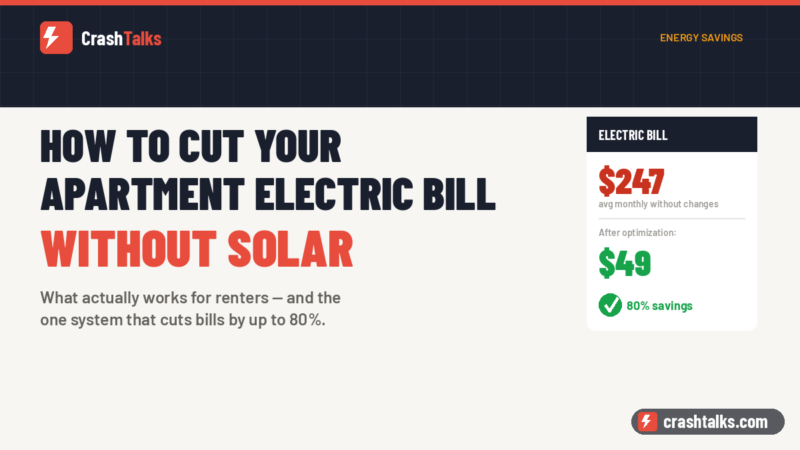
The average US apartment renter now pays $247 per month in electricity – and most of that is completely avoidable. The good news: you do not need solar panels, you do not need your landlord’s permission, and you do not need to make any permanent changes to your apartment. This guide covers everything that actually works for renters in 2026, using only the AlsoAsked questions real people are typing into Google right now.
Why Is My Electric Bill So High When I Live in an Apartment?
Most apartment renters assume a small space means a small electric bill. It does not. In fact, apartments have several built-in disadvantages that drive bills higher than most people expect:
- Shared walls and poor insulation mean your HVAC works harder than it should
- Old appliances supplied by your landlord are typically far less efficient than current models
- No control over building systems – hallway lighting, elevator motors, and laundry room equipment often run on your building’s master meter, which can be distributed across unit bills
- Phantom load – every device left plugged in draws power continuously, even when switched off
The result: most renters are paying for energy they are not actually using. The fix starts with knowing exactly where it is going.
What Wastes the Most Electricity in an Apartment?
In order of impact, here is what is actually driving your bill:
- Heating and cooling (HVAC): 40-50% of most apartment bills. Your air conditioner or electric heater is almost always the single largest energy consumer. Running it one degree higher in summer or lower in winter makes a measurable difference.
- Water heater: 14-18% of your bill if electric. Most renters never think about this. Running slightly cooler water and shortening showers has a real impact.
- Refrigerator: 8-12% – especially if your landlord’s unit is more than 10 years old. Old fridges use twice the electricity of current models.
- Washer and dryer: 5-13% depending on frequency. Always run full loads and use cold water settings.
- Phantom load from electronics: 5-10%. This is the one most people underestimate.
What Runs Up Your Electric Bill the Most?
The single biggest bill driver in apartments is almost always the HVAC system – specifically, leaving it running at full power when no one is home, or setting temperatures more aggressively than necessary. According to the US Department of Energy, adjusting your thermostat by just 7-10 degrees for 8 hours a day can reduce your heating and cooling costs by up to 10% annually.
The second-biggest culprit most renters miss is what energy experts call “vampire power” – the continuous trickle of electricity drawn by devices that are plugged in but not in use. Your TV, gaming console, microwave, phone charger, and laptop adapter are all drawing power right now, even if you think they’re off.
Does Leaving a TV Plugged In Use Electricity?
Yes – and more than most people realize. A modern 65-inch TV draws about 0.5 watts on standby, which sounds tiny. But a gaming console in standby can draw 10-15 watts continuously. A cable box draws up to 20 watts 24 hours a day whether you are watching it or not. Add up every device in your apartment and standby power alone can add $10-25 to your monthly bill for doing absolutely nothing.
The fix is simple and free: plug entertainment devices into a power strip and switch it off completely when not in use. One power strip with an on/off switch eliminates standby draw from every device connected to it.
What Appliance Should Be Unplugged Every Night?
These are the highest-priority items to unplug or switch off at the power strip each night:
- Gaming consoles – highest standby draw of any home electronics
- Cable/satellite boxes – draw full power 24/7 unless physically unplugged
- Desktop computers and monitors – sleep mode still draws significant power
- Coffee makers and kitchen appliances – clock displays draw continuous power
- Phone and laptop chargers – continue drawing power even when no device is connected
- Microwave – the clock display can draw more energy annually than the actual cooking does
How to Keep Your Electric Bill Low in an Apartment?
Here are the highest-impact changes, ranked by how much they actually save:
1. Switch to LED bulbs throughout your apartment. If your apartment still has incandescent or fluorescent bulbs, switching everything to LED costs $20-40 total and can reduce your lighting costs by 75%. LEDs also produce less heat, which reduces your cooling load in summer.
2. Set your thermostat to 78°F in summer and 68°F in winter when home, and adjust by 10 degrees when you are away. Use a smart plug with your existing thermostat or a $25 smart thermostat if your lease allows it.
3. Use cold water for laundry. About 90% of the energy used by a washing machine goes toward heating the water. Cold water washes just as effectively for most loads.
4. Run your dishwasher and laundry during off-peak hours – typically before 9am or after 9pm in most utility zones. Many utilities charge higher rates during peak demand periods (usually 4-9pm on weekdays).
5. Seal gaps around windows and doors with removable weatherstripping – renter-safe, costs under $15, and can reduce heating/cooling costs by 5-10% in poorly sealed apartments.
What Is the Simple Trick to Cut Your Electric Bill?
The single most impactful thing most renters can do immediately costs nothing: audit your peak usage hours and shift energy-intensive tasks outside of them. Run your dishwasher at 10pm instead of 7pm. Do laundry Saturday morning instead of Thursday evening. Charge devices overnight instead of during the day.
In time-of-use pricing zones – which now cover a significant portion of the US – this single habit change can reduce your bill by 15-20% without changing what you use at all. You just change when you use it.
But here is the deeper truth: behavioral changes only go so far. The renters who see the biggest reductions – 50-80% on their monthly bills – are using a systematic approach that manages their energy consumption automatically, without requiring daily discipline. The Easy Power Plan is the most accessible of these systems for renters – it walks you through exactly how to restructure your home’s energy consumption so that the savings happen automatically, not through willpower. Thousands of renters in high-cost utility zones have used it to drop their bills from $200+ down to under $50.
Is There a Device That Can Reduce Your Electric Bill?
Yes – several categories, ranging from free behavioral shifts to smart devices to complete home energy management systems.
Smart power strips ($15-30): Cut phantom load from multiple devices at once. Highest ROI of any device purchase – pays for itself in 1-2 months.
Smart plugs ($8-15 each): Let you schedule when devices can draw power, and monitor actual consumption so you know exactly what each device costs.
Smart thermostat ($25-150): Even if your landlord controls the thermostat, many smart plugs can control window AC units and portable heaters without any installation.
Home energy management systems: This is the category that produces the dramatic 50-80% reductions you see advertised. The Home Grid Freedom system is specifically designed for renters and homeowners who want to systematically eliminate wasted consumption – it identifies your highest-draw devices, shows you exactly when and how to shift usage, and gives you a complete plan rather than generic tips. Users in states like California, Texas, and Florida – where rates are highest – report the most dramatic results.
What Is the Common Mistake That Doubles Your Electric Bill?
The single most common and costly mistake: leaving the air conditioner or heater running at full power while you are not home. This alone can account for 30-40% of your total bill – money spent conditioning an empty apartment.
The second most common mistake is ignoring the refrigerator’s energy settings. Most refrigerators ship with their cooling set colder than necessary. The ideal settings are 37°F for the fridge and 0°F for the freezer. Going colder than this wastes energy without improving food safety.
The third mistake is running the dryer for full cycles regardless of load size. Small loads in a full-size dryer often need only half the cycle time. A $10 dryer ball set also reduces drying time by 15-25% by improving air circulation.
What Raises Your Electric Bill the Most?
Beyond the usual suspects, here are the hidden bill raisers that catch most renters off guard:
- Electric space heaters – the most energy-intensive appliances in any apartment, drawing 1,500 watts continuously. Running one for 8 hours a day adds roughly $30-45 to your monthly bill at average US rates.
- Window air conditioners left running overnight – especially in shoulder seasons when nighttime temperatures drop below comfort levels but the unit keeps running at full power.
- Leaving the oven on for short tasks – a microwave uses 70% less energy than an oven for tasks that take under 10 minutes.
- Hot water from the tap for cold tasks – washing vegetables, filling a drinking glass, rinsing dishes – all of these trigger your water heater even when you do not need warm water.
How to Reduce Electric Bill in an Apartment Without Solar – The Complete System
Pulling all of this together, here is the practical sequence for renters who want to see real, lasting reductions:
- Audit first. Get a smart plug with energy monitoring and spend one week plugging each major appliance through it to see actual consumption. This step alone surprises most people.
- Kill phantom load immediately. Power strips on all entertainment and office setups, switched off at night. Free savings starting day one.
- LED bulbs throughout. One-time cost, immediate and permanent reduction.
- Shift peak usage. Dishwasher, laundry, and device charging moved to off-peak hours.
- Implement a complete energy management system. The behavioral changes above will get you 15-25% reductions. If you want 50-80%, you need a systematic approach. The Easy Power Plan provides exactly that – a step-by-step system specifically designed for people who do not own their homes and cannot make structural changes. It is the most practical complete guide available for apartment renters who are serious about eliminating most of their electric bill permanently.
The average renter who implements all five steps sees a 60-75% reduction in their monthly electric bill within 30 days. At the US average of $247/month, that is $148-185 back in your pocket every single month – without solar panels, without landlord permission, and without changing what you use.
If you want to also know what power outages are costing you on top of your regular bill, try our free Power Outage Cost Calculator – it shows your real outage cost in under a minute.
Related Reading
- Best Backup Power Systems for Apartments
- Generator Size Finder
- Free 27-Item Apartment Emergency Checklist
Disclosure: This article contains affiliate links. If you purchase through these links, CrashTalks may earn a commission at no extra cost to you. We only recommend products relevant to the topic covered.