Storing emergency water in a small apartment can be challenging, but you do not need a basement, garage, or large storage room to build a reliable supply. The key is to calculate your minimum water requirement, choose compact food-grade containers, and use overlooked storage spaces safely.
The CDC recommends storing at least 1 gallon of water per person per day for 3 days, with a goal of building toward a 2-week supply if possible. People living in hot climates, pregnant women, people who are sick, and households with pets may need additional water.
For apartment residents, the best approach is to spread water storage throughout the home rather than trying to keep everything in one place.
How Much Water Should You Store in an Apartment?
Start by calculating your household’s minimum requirement.
Number of people × 1 gallon × number of days = minimum emergency water supply
For example:
| Household | 3 Days | 7 Days | 14 Days |
|---|---|---|---|
| 1 person | 3 gallons | 7 gallons | 14 gallons |
| 2 people | 6 gallons | 14 gallons | 28 gallons |
| 3 people | 9 gallons | 21 gallons | 42 gallons |
| 4 people | 12 gallons | 28 gallons | 56 gallons |
If your apartment is extremely small, start with the 3-day supply and gradually build toward a longer supply.
You do not have to purchase or store everything at once.
1. Use the Space Under Your Bed
The area underneath a bed is one of the most useful locations for emergency water storage.
Instead of allowing this space to collect unused boxes and miscellaneous items, use it for low-profile water containers.
Flat containers can slide underneath beds, while smaller bottles can be placed inside organized storage bins.
Keep containers protected from direct sunlight and extreme heat. The CDC recommends storing home-filled water in a cool location, away from sunlight and toxic substances.
Why Under-Bed Storage Works
- It uses otherwise wasted space.
- It keeps heavy containers away from high shelves.
- It can accommodate several smaller containers.
- Water remains accessible during an emergency.
However, make sure the floor and bed structure can safely support the additional weight.
Remember: water is heavy. One gallon weighs approximately 8.3 pounds.
2. Use the Bottom of a Closet
Closet floors can provide valuable emergency-storage space.
Place several compact water containers along the back or side of the closet rather than stacking heavy containers above shoulder height.
You can store:
- Emergency water
- Emergency food
- Flashlights
- Battery-powered radios
- First-aid supplies
- Other disaster supplies
Keep drinking water separated from cleaning chemicals, pesticides, gasoline, and other potentially hazardous products.
3. Store Water Under Shelves
If your apartment has shelving, use the lowest shelves for water.
Avoid placing large containers on high shelves because water is extremely heavy. A container that holds 5 gallons weighs roughly 42 pounds before accounting for the container itself.
Lower storage is safer and easier to access.
A useful apartment strategy is:
Heavy items low → frequently used items at waist level → lightweight items high
4. Use Kitchen Cabinet Space Carefully
Some kitchen cabinets can accommodate smaller emergency-water containers.
However, avoid putting heavy water containers inside cabinets that are not designed to support significant weight.
Instead of storing one large container, consider using several smaller containers.
For example, rather than keeping one large 10-gallon container, you could divide the supply into multiple smaller containers that are easier to lift and carry.
This also provides redundancy: if one container develops a problem, you do not lose your entire supply.
5. Use the Back of a Pantry
A pantry can be an excellent location for emergency water.
Place water containers along the bottom or back of the pantry while keeping frequently used food items accessible.
If you rotate your emergency water regularly, you can also incorporate older bottles into normal household use and replace them with fresh supplies.
This approach prevents your emergency supply from becoming forgotten.
6. Consider a Water Storage Bench or Ottoman
Small apartments often require furniture that serves more than one purpose.
A storage bench, ottoman, or similar piece of furniture can potentially provide additional space for emergency supplies.
However, make sure the furniture is specifically capable of supporting the weight. Do not overload ordinary furniture simply because there is empty space inside it.
This strategy works particularly well in studio apartments where dedicated storage space is limited.
7. Use Commercially Bottled Water
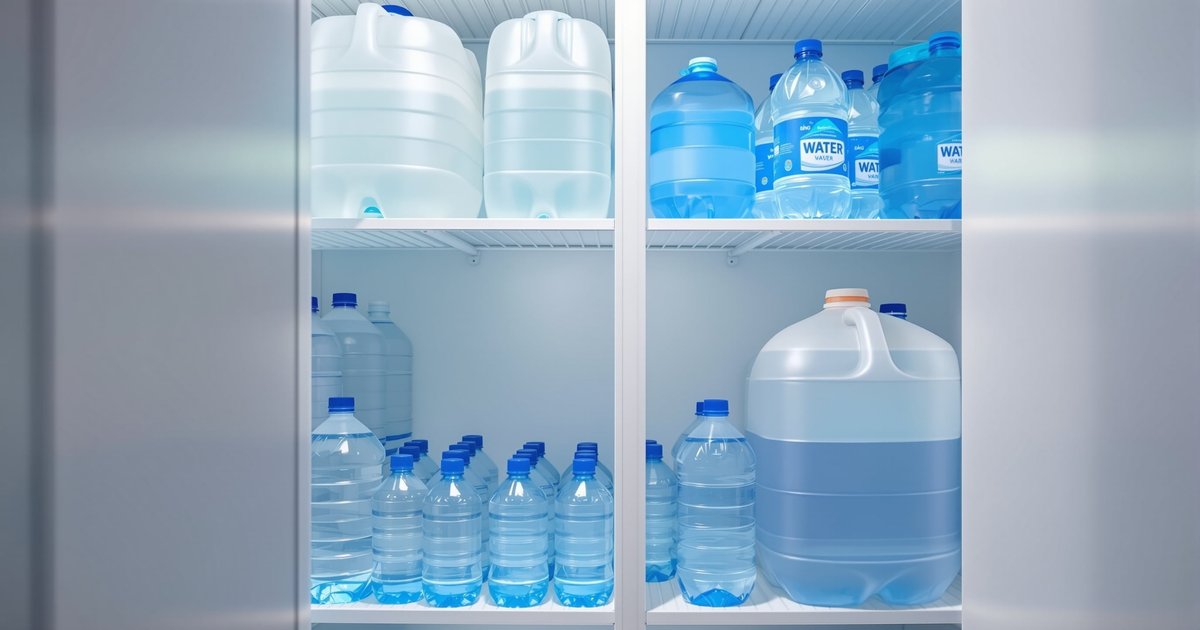
For apartment residents who have very limited space, commercially bottled water can be one of the simplest options.
The CDC identifies unopened commercially bottled water as the safest and most reliable emergency water supply. Keep commercially bottled water in its original packaging and follow the manufacturer’s storage and use guidance.
The advantage is convenience:
- No container preparation
- Easy rotation
- Individual bottles are easy to carry
- No need to fill large containers
- Convenient for evacuation
The disadvantage is that individual bottles can consume more storage space than purpose-built containers.
8. Choose Compact Food-Grade Water Containers
If you want to maximize storage efficiency, use containers designed specifically for drinking-water storage.
The CDC recommends FDA-approved food-grade water storage containers for people storing water themselves. Containers should close tightly and should ideally have a narrow opening that reduces the risk of contamination.
Avoid containers that previously held:
- Gasoline
- Pesticides
- Chemicals
- Cleaning products
- Other toxic substances
These containers can contaminate water even after cleaning.
9. Divide Your Water Between Several Locations
One of the smartest apartment-storage strategies is distributed storage.
Instead of storing all 28 gallons in one location, you might divide the supply among several safe areas.
For example, a two-person household preparing for seven days could store:
- 6 gallons under the bed
- 4 gallons in a closet
- 4 gallons in a pantry
The exact arrangement depends on your apartment.
Distributed storage has another advantage: if one area becomes inaccessible because of a fire, flood, structural damage, or another emergency, you may still have water somewhere else.
10. Don’t Store Water in Direct Sunlight
Water storage location matters.
The CDC recommends keeping stored water in a cool location and away from direct sunlight. It should also be kept away from toxic substances such as gasoline and pesticides.
For an apartment, avoid using:
- Sunny balconies
- Hot window areas
- Areas next to radiators
- Extremely hot storage rooms
- Areas next to chemicals
A dark interior closet can often be a better choice.
11. Label Every Container
If you fill your own water containers, clearly label them:
DRINKING WATER — FILLED: [DATE]
The CDC recommends labeling containers as drinking water and including the storage date. Home-filled water should generally be replaced every six months.
A simple reminder on your phone or calendar can help you remember when it is time to rotate the supply.
12. Sanitize Containers Before Filling Them
If you are filling your own emergency-water containers, clean and sanitize them first.
The CDC recommends washing the container with soap and water, then sanitizing it with a solution made using 1 teaspoon of unscented household chlorine bleach in 1 quart of water. The bleach should contain 5%–9% sodium hypochlorite. After allowing the solution to contact the interior surfaces for at least 30 seconds, empty the container and let it air-dry before filling it with clean water.
Never mix bleach with ammonia or other cleaning products.
13. Make Water Easy to Carry
During a power outage, fire, earthquake, flood, or building evacuation, you may need to move your emergency supplies quickly.
That is why several smaller containers can be more practical than one enormous container in an apartment.
Consider:
- Your physical ability to lift the container
- Stair access
- Elevator availability
- Distance to your apartment exit
- Whether another household member can move it
- Whether the container has a handle
A storage plan should work during an emergency—not just look efficient on paper.
14. Don’t Forget Your Pets
If you have pets, include their water needs in your emergency plan.
The CDC recommends considering additional water for pets and other special circumstances.
Keep a separate supply for pets when possible. This makes it easier to track how much water remains and prevents you from accidentally using the household drinking supply faster than planned.

15. Keep a Small Grab-and-Go Water Supply
Your main water supply can remain in storage while a smaller amount stays ready for immediate evacuation.
For example, keep several sealed bottles near your emergency backpack or evacuation kit.
If you need to leave your apartment quickly, you can grab them without searching through closets.
This is particularly useful for:
- Apartment fires
- Earthquakes
- Severe storms
- Extended power outages
- Building evacuations
- Water contamination emergencies
Common Apartment Water-Storage Mistakes
Avoid these common mistakes when building an emergency supply.
Storing Everything in One Place
If the storage area becomes inaccessible, you could lose your entire supply.
Better: distribute water across several safe locations.
Putting Heavy Containers on High Shelves
Heavy water containers can fall and cause injuries or property damage.
Better: store heavy containers low.
Using Old Chemical Containers
A container that previously held chemicals should never be reused for drinking water.
Better: use food-grade containers specifically designed for water storage.
Forgetting to Rotate Home-Filled Water
Water stored at home should not simply be forgotten.
Better: label containers and replace home-filled water every six months.
Storing Water in the Sun
Direct sunlight is not recommended for stored emergency water.
Better: choose a cool, dark indoor location.
Best Water-Storage Plan for a Small Apartment
A simple apartment strategy looks like this:
Step 1: Calculate your minimum requirement.
Step 2: Start with three days of water.
Step 3: Purchase compact food-grade containers or commercially bottled water.
Step 4: Divide the supply between safe storage locations.
Step 5: Keep heavy containers low.
Step 6: Keep water away from sunlight, heat, and chemicals.
Step 7: Label home-filled containers with the storage date.
Step 8: Replace home-filled water every six months.
Step 9: Gradually increase your supply toward two weeks if space allows.
Frequently Asked Questions
How much water should I store in a small apartment?
Store at least 1 gallon per person per day for three days, meaning a minimum of 3 gallons per person. If space permits, work toward a two-week supply.
Where is the best place to store water in an apartment?
Good locations include a cool closet floor, pantry floor, under-bed storage, or another protected indoor location away from sunlight and chemicals.
Can I store emergency water under my bed?
Yes. Under-bed storage can be an efficient use of apartment space, provided the containers are protected and the floor and furniture can safely support their weight.
Is bottled water better than tap water for emergency storage?
The CDC considers unopened commercially bottled water the safest and most reliable emergency water supply.
How long can I store water in containers?
For water you fill yourself, the CDC recommends replacing it every six months. Commercially bottled water should be stored and used according to the manufacturer’s guidance.
Can I store water on my apartment balcony?
It is generally better to store emergency water indoors in a cool location away from direct sunlight. Balconies can expose containers to heat and sunlight and may also create structural-load concerns depending on the building.
What if I don’t have enough space for 14 gallons per person?
Start with the 3-day minimum and build your supply gradually. Using smaller containers and distributing them throughout the apartment can make emergency storage much easier.
Final Thoughts
You do not need a large home to store emergency water. With careful planning, even a small apartment can maintain a useful emergency supply.
Start with 1 gallon per person per day for at least three days, then gradually work toward a two-week supply. Use food-grade containers or commercially bottled water, keep heavy containers low, distribute water across multiple safe locations, and protect it from sunlight, heat, and chemicals.
The most important step is simply to start storing water before an emergency happens. A few gallons today can make a major difference when your apartment’s normal water supply is interrupted.